Regression Analysis |
Futures |
Options |
Risk Management |
Excel |
Regression Analysis | Futures | Options | Risk Management | Excel |
Commodity Price Risk & Hedging Strategy
Optimising futures and options exposure for a dairy producer
Financial Economics
Royal Holloway, University of London
Managing Dairy Price Risk
Using futures and options to protect a dairy producer in California against volatile milk prices.
Dairy farming is unusually exposed to financial risk. Milk prices fluctuate, input costs change, and farmers have limited ability to pass higher costs on to customers. At the same time, production cannot simply be switched off when market conditions deteriorate.
For this project, I used historical market data to investigate how a large California dairy producer could manage this exposure using traded derivatives.
The Problem for dairy farmers
The farm is committed to producing milk every day, but has little control over what that milk will be worth.
This creates an unusual commercial problem where production is relatively fixed, while revenue is determined by the market.
Volatile selling price
The farm's historical mailbox price ranged from $10.16 to $19.98 per cwt, creating substantial variation in revenue from the same underlying production.
Limited pricing power
As a price taker, the farmer has little control over the price received for milk and cannot charge customers more when feed, fertiliser or other operating costs increase.
Production cannot stop
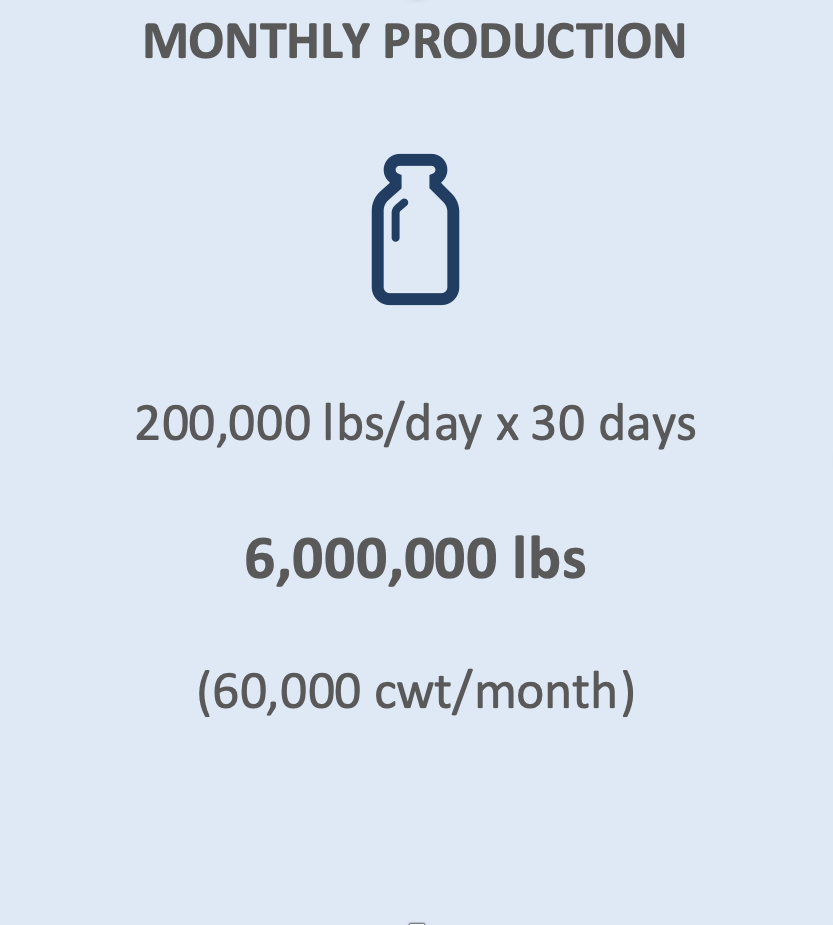
The farm produces approximately 200,000 lbs of milk each day. Biological production constraints mean supply cannot be rapidly reduced when market prices deteriorate.
The hedging challenge
How can the farmer protect income when milk prices fall, without unnecessarily giving up the benefit when prices rise?
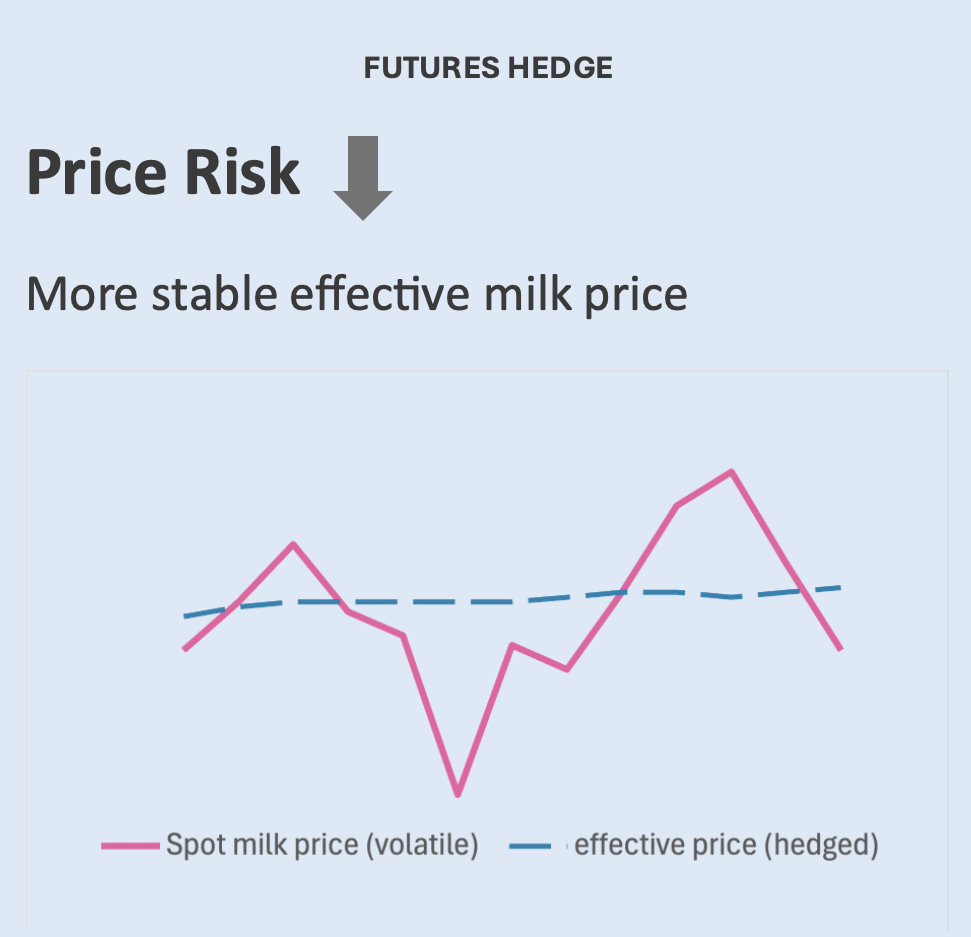
One way to manage this risk is to use financial contracts whose value moves with the price of milk. If milk prices fall, gains on the hedge can offset some of the revenue lost from selling milk at a lower price.
The first challenge is finding the right contract.
Which contract best tracks the farm's milk price?
The farm's mailbox price cannot be traded directly, so I needed to identify a suitable futures contract to cross-hedge the exposure. I tested four dairy contracts using linear regression to measure how closely each moved with the farm's historical milk price.
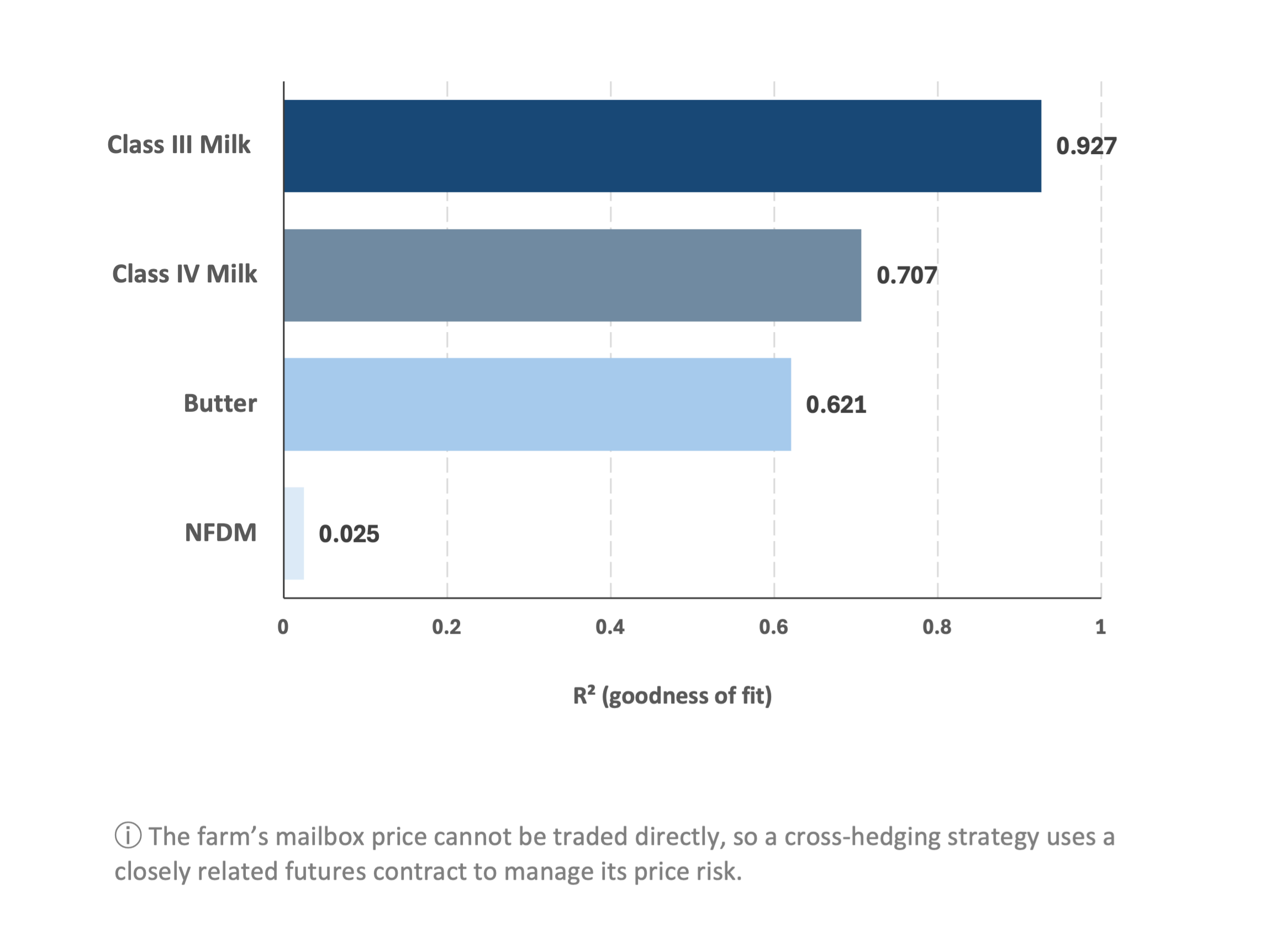
Class III Milk
92.7%
of variation in the mailbox price was explained by Class III futures prices.
This indicates the strongest relationship with the farm's mailbox price and the lowest basis risk.
This is the best candidate for a cross-hedge.
Since Class III futures contract best tracks the farmers milk prices, the farmer needs to offset losses if milk prices fall. Therefore we need to take the opposite position and short Class III futures. If milk prices fall, the farm receives less for its milk, but the short futures position gains value.
How much exposure should be hedged?
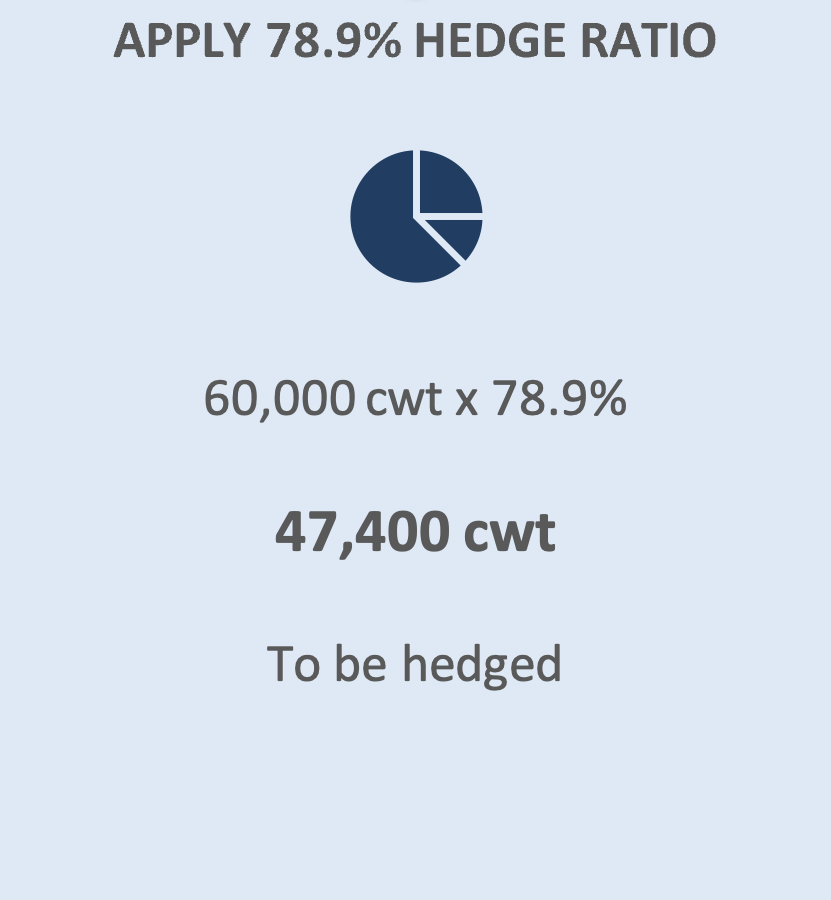
Identifying the contract was only the first step. I then used the regression coefficient to estimate the minimum-variance hedge ratio, determining how much of the farm's exposure should be hedged.
0.789
Optimal hedge ratio
78.9%
of the farm's milk exposure should be hedged
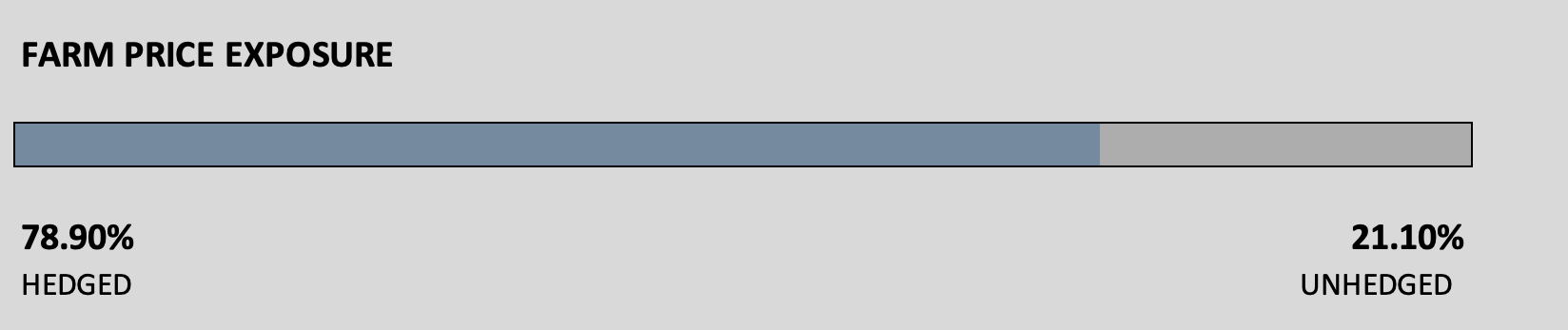
A full 1:1 hedge would over-hedge the exposure.
The estimated relationship suggests hedging 78.9%, leaving 21.1% unhedged due to the imperfect relationship between Class III and the farm's actual milk price.
Translating the analysis into a trade
With Class III identified as the strongest hedge and 78.9% of the farm's price exposure to be hedged, I translated the strategy into an executable futures position. As the farmer is exposed to falling milk prices, the hedge requires a short position in Class III futures
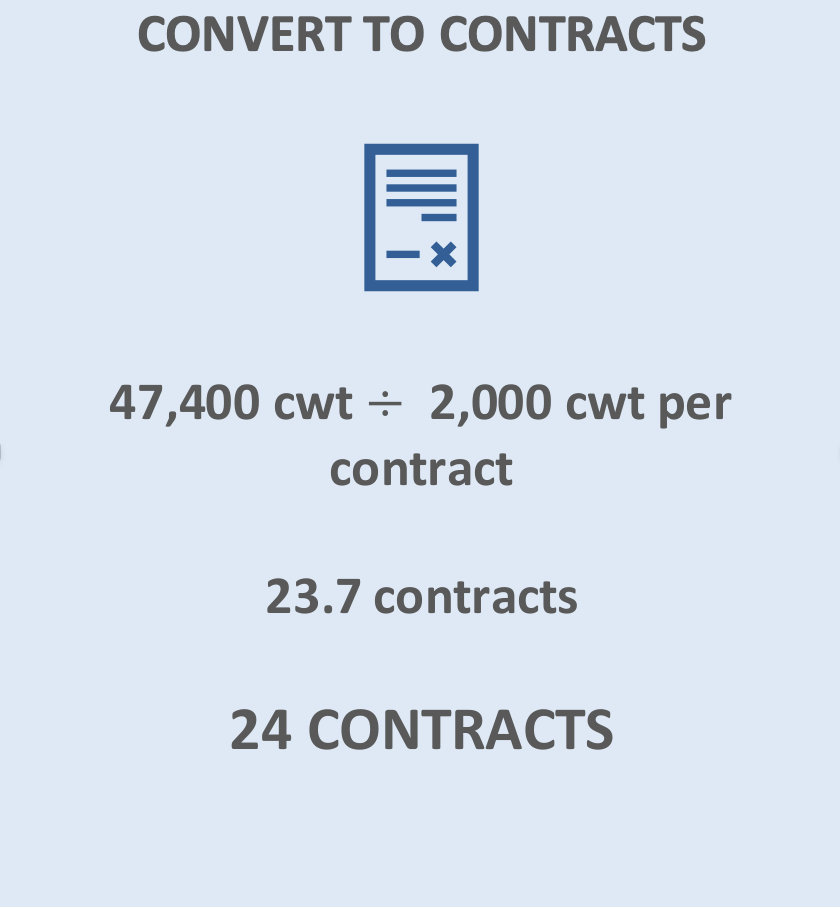
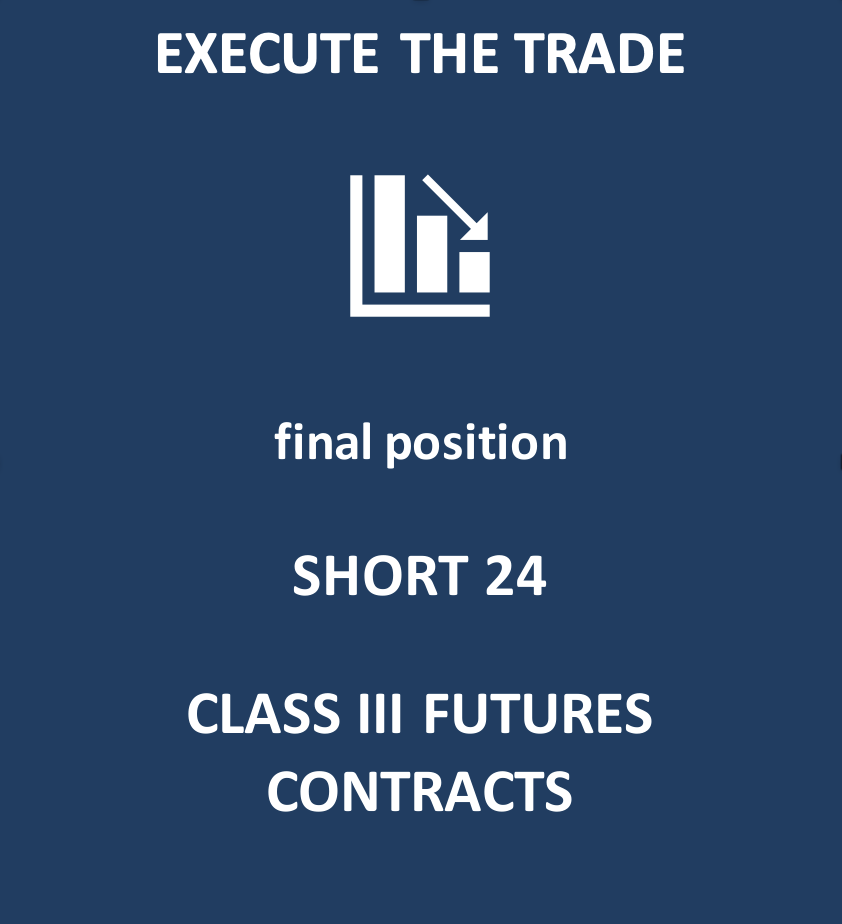
If milk prices fall, gains on the short futures position help offset the farm's lower milk revenue.
But the statistically strongest answer wasn't necessarily the best decision
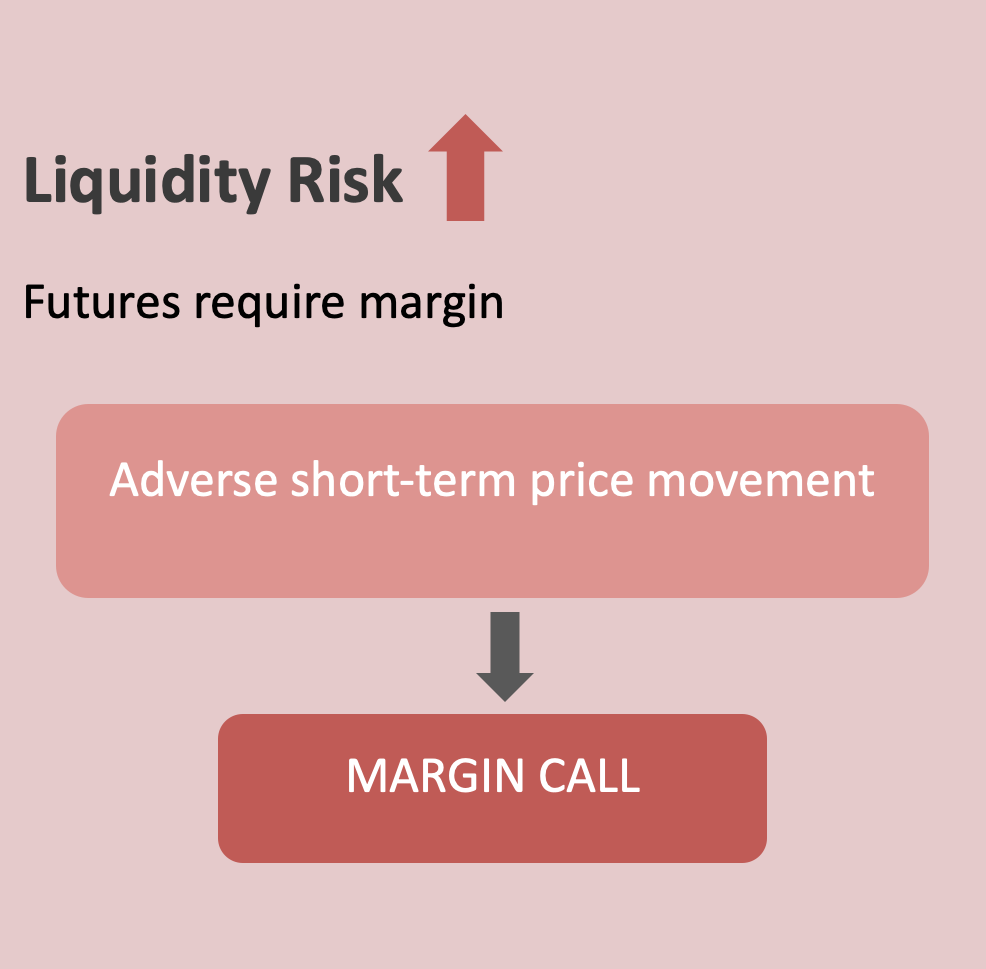
Hedging price risk can create liquidity risk.
Futures reduced price uncertainty, but margin requirements introduced a different vulnerability: adverse short-term movements could trigger cash demands even while the hedge remained economically effective.
An alternative: protecting the downside with put options
A put option offered a different trade-off. Instead of locking in a price through futures, the farmer could pay a premium for protection against falling prices while retaining the benefit if prices rose.
Choosing the strike price
I used the relationship between the farm's mailbox price and Class III futures to estimate where Class III would trade when the farmer's target milk price was $12.50.
TARGET MAILBOX PRICE
$12.50
↓
REGRESSION ESTIMATE
↓
PREDICTED CLASS III PRICE
$13.24
↓
Options trade in $0.25 strike increments
↓
$13.25 PUT
Selected strike price
The put creates asymmetric protection: the farmer is protected when Class III prices fall below the strike, while retaining the benefit of higher milk prices if prices rise.
If put falls below $13.25
↓
Put gains value
↓
Helps offset lower milk revenue
↓
DOWNSIDE PROTECTED
How the protection works
If put rises above $13.25
↓
Put expires unused
↓
Farmers benefits from higher milk prices
↓
UPSIDE RETAINED
The cost of the premium reduces the effective floor price
Example: if Class III falls to $12.00, the $13.25 put has a $1.25 payoff before the premium.
Recommendation
I recommended the Class III put-option strategy.
Although futures provided greater price certainty, the put option offered downside protection by establishing a minimum price, while allowing the farmer to benefit if milk prices rose and avoiding the short-term liquidity pressures associated with futures margin calls. The premium was the cost of maintaining that flexibility.
Want to explore the analysis in full?
Read the complete analysis, including methodology, hedging strategy and contract selection.